

QUEEN partners share experiences in Cork to strengthen quality apprenticeships
The fourth interregional meeting, held on 4–5 November, focused on guidance, entrepreneurship and apprentices’ voices. The Basque Country presented PEAC, a procedure for recognising skills acquired through work experience and non-formal learning.
Partners of the Interreg Europe project QUEEN met in Cork, Ireland, on 4–5 November 2026 to exchange experiences on improving regional apprenticeship policies. Hosted by Cork County Council, the meeting brought partners together to hear from training providers and apprentices and identify good practices that could be relevant to their own territories.
The Basque contribution: recognising learning gained through experience
During the good practice exchange, the Basque Country presented PEAC, a procedure that provides formal recognition of vocational competences acquired through work experience or non-formal learning. Other territories shared a range of approaches: Bucharest-Ilfov presented a pathway widening access to electronics and automation training; Tuscany addressed barriers to dual apprenticeships; Finland shared an opportunity to include training abroad within a qualification; South Moravia presented a platform for choosing practical training placements; and Zenica-Doboj Canton outlined grants supporting cooperation between small and medium-sized businesses and schools.
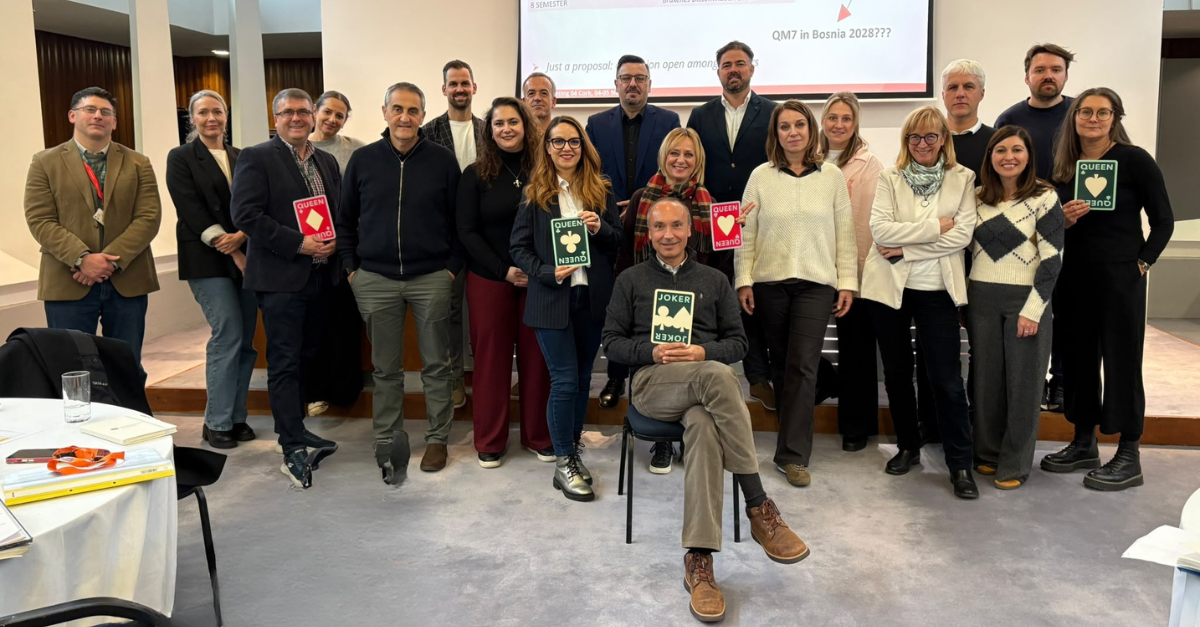
Partners voted for the practices they wished to explore further in their regions, helping to shape priorities for future exchanges.
From apprentice to entrepreneur: learning from Cork
The meeting explored Cork’s initiatives for skills development and lifelong learning. Among them, the Start Your Own Business programme showed how mentoring, group activities and peer networks can help craftspeople set up their own businesses. This prompted discussion about careers guidance: showing how apprenticeships can lead to business ownership could help make these pathways more attractive.
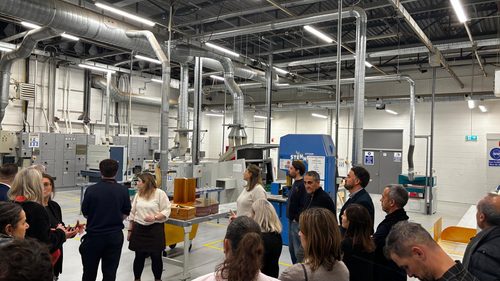
Visits to Munster Technological University and Cork College of FET provided a closer look at the Irish model, which combines paid work with formal training and assessment both in the workplace and at a training centre.
Apprentices’ voices and next steps
Civil engineering apprentices Jason and Abby shared their experience at Cork County Council, where they spend four days a week on site and one studying online, supported by a mentor. Electrician Kerrie Anne Fitzgerald described the difficulties of finding her first employer and highlighted the importance of making women in the trades more visible and listening to apprentices.
In workshops led by EARLALL and Resolvo, partners identified topics for the next round of good practices and planned bilateral meetings. The aim is to translate regional experience into policy proposals that improve the quality, inclusiveness and attractiveness of apprenticeships.