

SECOND MEETING OF THE QUEEN PROJECT PARTNERS IN THE BASQUE COUNTRY
The second partner meeting of the QUEEN project took place on 26–27 November 2025 in San Sebastian, the Basque Country. The meeting brought together project partners and local stakeholders. Hosted by TKNIKA (the Basque Country’s applied research centre for VET, iTlent (Basque Institute of Talent in VET) and IVAF (Basque Institute for Future Learning in Vocational Education and Training), the two-day event explored territorial challenges, innovative solutions and models to strengthen apprenticeship systems across Europe.
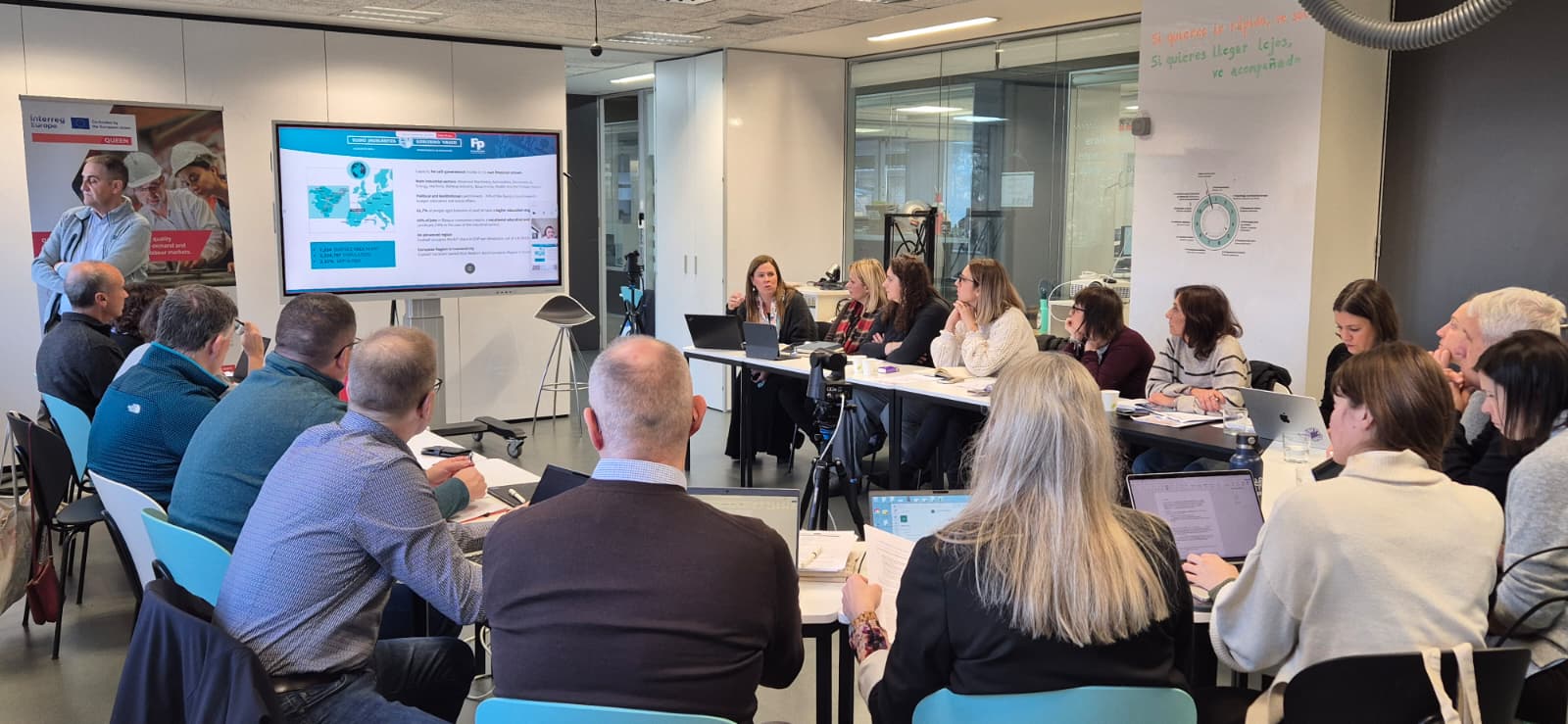
Inge Gorostiaga Luzarraga, Director of Digital Transformation and Advanced Learning, opened the meeting with an overview of the Basque vocational education system. She underlined its strong labour-market orientation, the rapid growth in student numbers and the region’s commitment to investing in people. Inge highlighted key priorities, including the new multifunctional VET model, the strategic VET Plan 2030 and the work of its three supporting agencies, alongside the system’s deep ties with industry, dual training and inclusive, future-oriented learning.
Lorenzo Sabatini, Project Coordinator, welcomed the participants by noting that the project is currently positioned between identifying needs and shaping solutions, making this meeting key for advancing policy improvements. Sabatini also underlined that participants would explore the Basque Country’s dual apprenticeship model, the ETHAZI challenge-based learning approach by iTlent, and the guidance strategy developed by IVAF.
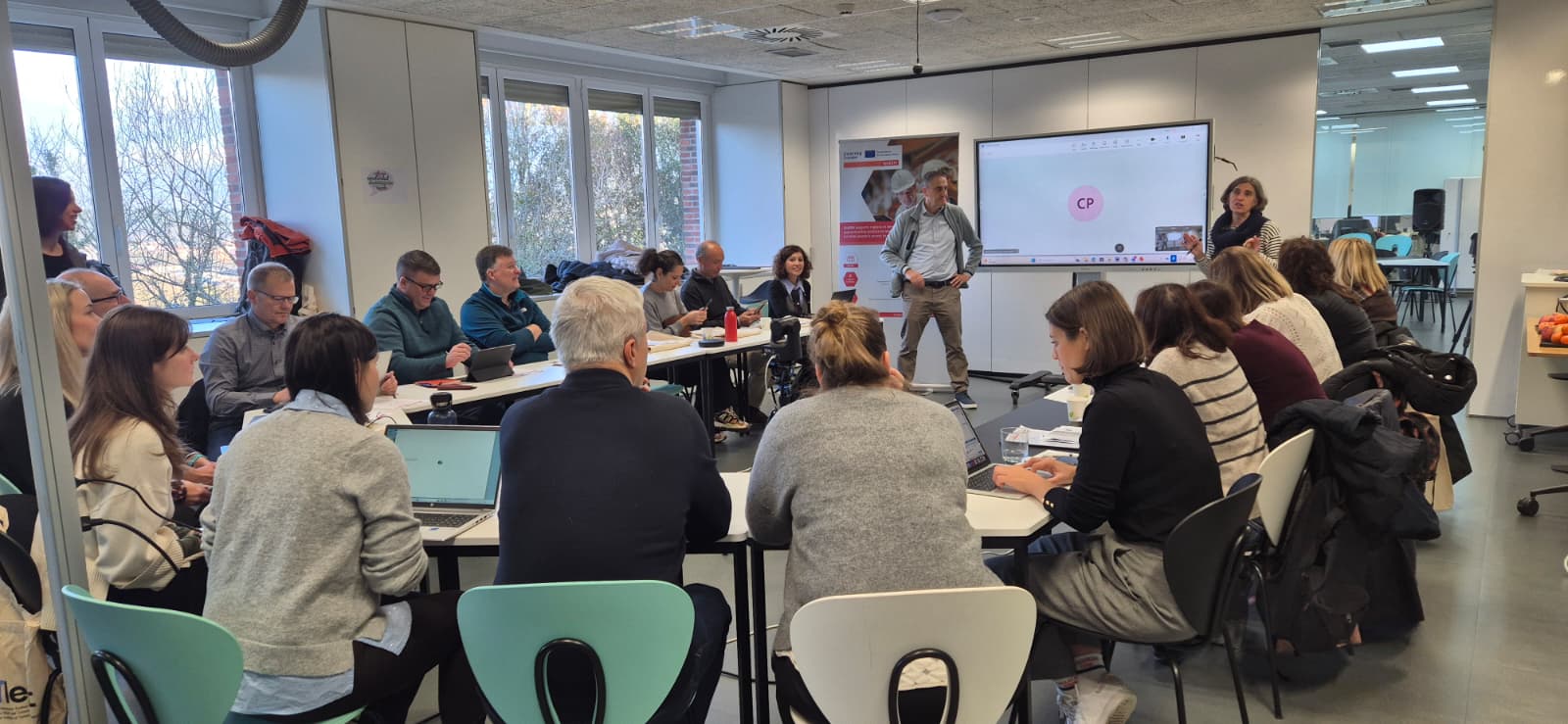
The technical contributions began with José Ramón Gómez Laconcha, Executive Director at iTlent, expanded on the region’s strong industrial ecosystem, highlighting the essential cooperation between companies, clusters and universities. He outlined how dual vocational training operates in the Basque Country, noting recent reforms that require all VET students to engage in dual training from their first year. José Ramón also introduced the ETHAZI model of challenge-based collaborative learning, a methodology now deployed across the VET network to strengthen problem-solving, creativity and critical thinking in real workplace environments. Building on this, Gorka Baqueriza Modrego, Director of the Technological Innovation and Intelligent Systems Area at TKNIKA, underlined the crucial role of VET institutions in transferring knowledge to industry. The presentations concluded with an intervention by Joseba Rodríguez Arza, Director of Emerging Professional Profiles at IVAF, who outlined the policy instrument selected by the Basque Country for the QUEEN project: the Guidance Strategy 2023–2026. He detailed how this strategic framework aims to strengthen personalised support for learners and enhance coordination across the VET system.
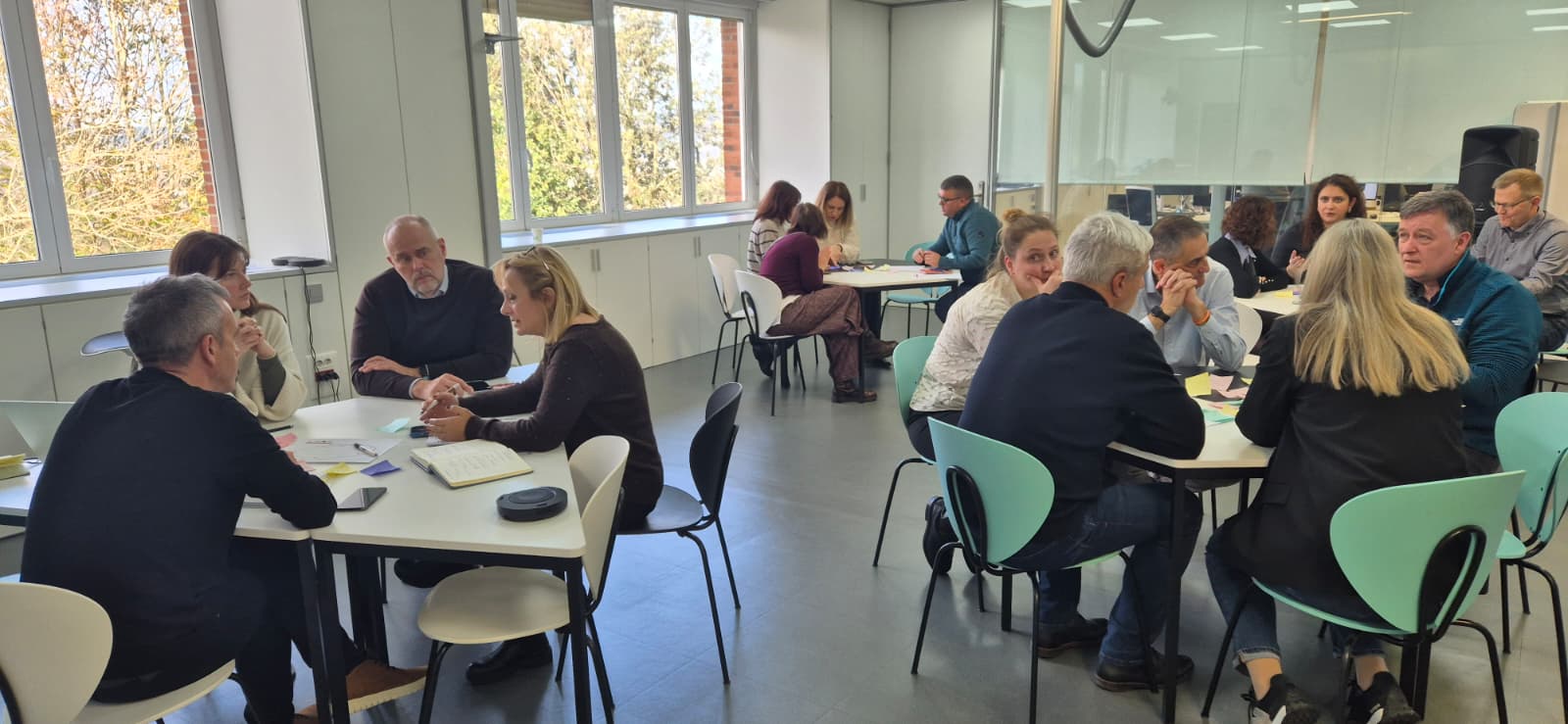
In the afternoon, partners took part in a hands-on Territorial Exhibition workshop facilitated by Resolvo. Working across four thematic areas—Digitalisation, Equality, Skills Mismatches and Comprehensive Strategies—partners explored ideal change scenarios and identified the enabling factors required to make them achievable. This collaborative exercise supported regions in identifying targeted policy adjustments to strengthen their apprenticeship and VET systems.
The Steering Group Meeting followed, providing updates on the project’s progress and the ongoing preparation of the good practices collection. EARLALL presented recent communication and dissemination achievements, highlighting the project’s growing visibility through articles, videos and stakeholder engagement.
The second day opened with an interactive workshop dedicated to good practices within the QUEEN partnership. Regions exchanged strengths and initiatives, sharing the latest updates from their region.
Study Visit: TKNIKA
Participants visited TKNIKA’s applied research facilities, gaining first-hand insight into VET development strategies. The international partners of the project received in-depth knowledge about the latest cutting-edge innovation in agricultural development, biotechnology, the health care sector and advanced manufacturing.
The Basque Country meeting reinforced the importance of interregional cooperation, innovation and solution-driven learning in shaping apprenticeship systems. Through peer learning and hands-on exchanges, the QUEEN project continues to build a stronger foundation for skills development, employability and inclusive regional growth. The insights gathered during these two days supported partners as they continue improving apprenticeship quality to address evolving labour market needs across Europe.
The next partner meeting will take place on 20–21 May 2026 in South West Finland.